- info@selfchec.org
Powered by Google  Translate
Translate Women’s
Breast Cancer

Risk Factors

Your Breast Cancer Risk Tool
Click the Breast Cancer Risk Calculator from The Siteman Cancer Center to help determine what may affect your chances of being diagnosed with breast cancer and what you can do to help reduce your risk.
Other Breast Cancer Risks May Include:
- Long-term use of hormone replacement therapy (HRT).
- Personal history of breast cancer or non-cancerous breast diseases.
- Family history of breast cancer (on either your mother’s or father’s side of the family).
- Treatment with radiation therapy to the breast/chest.
- Exposure to diethylstilbestrol (DES) (i.e., if you took DES during pregnancy or your mother took DES during her pregnancy with you).
Age Guidelines
To screen or not to screen for breast cancer? At what age? Sometimes the information we get from the national cancer advisory organizations can confuse us about what to do and when to do it because there are so many factors to consider. Review the breast cancer age guidelines below. Make an appointment with your health professional for a well-woman’s health check if you fall within the age ranges mentioned, or if you experience any early signs or symptoms of breast cancer.
Beginning at age 20,
Get a doctor check every three years. The chance of breast cancer occurring in your 20s is very low, but it can happen. If you have a family history of breast cancer, talk to your health professional about starting mammograms earlier than the general recommendations below.

How To Do Your Self-Check
Before Starting, Pick-A-Motion (PAM)
The best way to check your breasts each month is to pick-a-motion (PAM) you will use. The three illustrations below will help you make that choice.

wedge
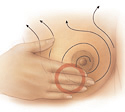
Circular
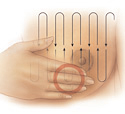
Up and Down
Use the inner pads of the three middle fingers (see red circle on each hand above). Press into your breasts using light, medium and firm pressure.
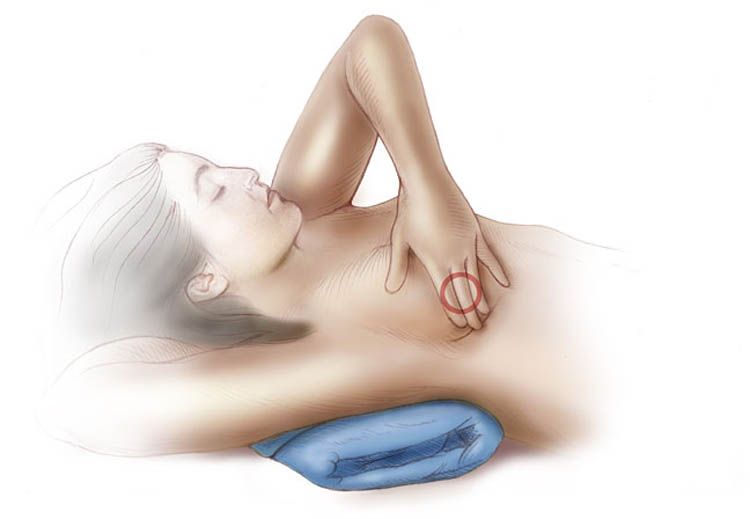
Be sure to feel the entire breast with the same motion each month. This will insure that you will pick up any changes in your breasts that may occur.
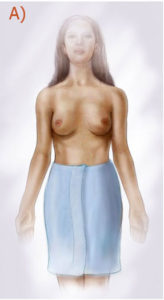
Now You’re Ready To Start
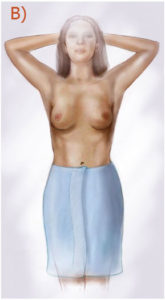
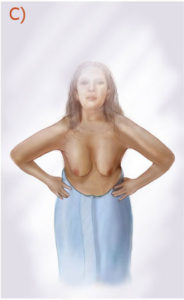
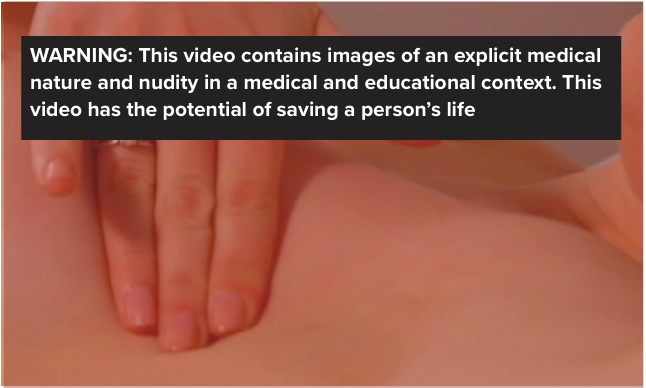
Signs And Symptoms
It’s important to become aware of what your breasts feel like so you know what normal is. If there are other changes in your breasts that do not feel or look right to you, get a doctor check as soon as possible. Here is a list of women’s breast cancer signs and symptoms you need to watch out for:
- Abnormal swelling in either the breast, nipple, or chest muscle.
- Lump, hard knot or thickening in the breast, chest or underarm area—this is usually not painful, but may be tender.
- Other changes in the size or shape of the breast.
- Skin dimpling or puckering.
- Itchy, scaly sore or rash on the nipple.
- Nipple that retracts, or turns inward.
- Redness on the nipple or breast.
- Nipple discharge
- Breast density.
Some of these symptoms may be from a non-cancerous breast condition. To be safe, if you notice any changes in your breast or nipple, see your health professional right away.

Reduce Your Chances Of Getting Breast Cancer

Taking the following life-saving actions by making healthy choices will help you reduce risks of breast cancer and other chronic diseases.
- Find out if you have a family history of breast cancer or any inherited changes in your BRCA1 and BRCA2 genes. You may (or may not) be at a higher risk for breast cancer.
- Do monthly self-checks.
- Exercise
- Eat healthier
- Maintain a healthy weight.
- Get enough sleep.
- Limit alcohol
Resource: CDC, MedlinePlus, Breast Cancer Care and JohnsHopkins
Frequently Asked Questions
.gif)
Learning about women’s breast cancer prevention and early detection can help save your breast and your life. Join the growing number of women who are lowering their chances of getting breast cancer by being proactive. Click the Frequently Asked Questions below for more answers.
Use the breast cancer Risk Calculator Tool on this page to help determine if you do. Read more
National organizations don’t always agree about when to start checking so how are you to know? We think we may have figured it out for you… Read more
Watch a video. Read a guide. Both created for you. Read more
This page will help empower you to take the the proactive steps to keep your breasts healthy. Read more
.png)