- info@selfchec.org
Powered by Google  Translate
TranslateStop Smoking

How To Cope Without Smoking
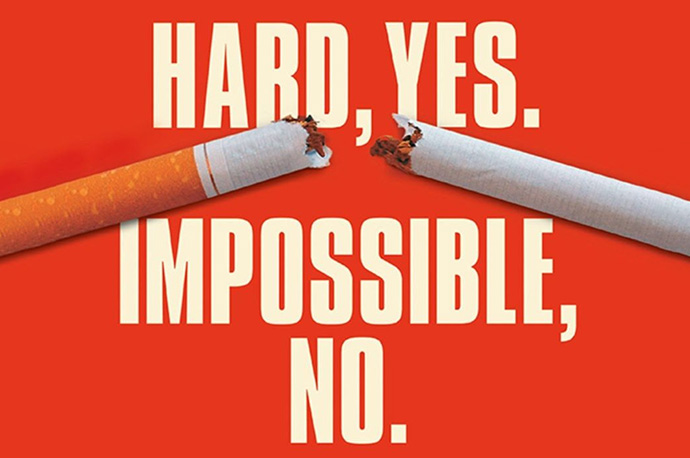
Expect—and plan for—mood changes when you try to quit. You might feel irritable, restless, blue or even depressed. But you can—and should—take steps to lift your mood.
The first thing to know is that smoking doesn’t do anything to help you deal with difficult emotions. People grab a cigarette to feel better, and some people do experience a mild chemical euphoria from nicotine, but the relief is only momentary. That’s called addiction.
Here are 10 tips to help brighten your outlook, no matter what’s causing your stress:
- Talk to and do things with friends and loved ones. Contact with other people will help lift your mood.
What Happens To Your Body
When You SMOKE & When You QUIT
According to the website Smokefree.gov, smoking harms nearly every organ of your body, and secondhand smoke is dangerous to anyone nearby. Quitting can undo a lot of the damage done to you the smoker, and will safeguard loved ones at home. Take this tour of your body to learn more.
Your Brain
When you smoke. Nicotine from cigarettes is an addictive drug—that’s why it’s so hard to stop. Your brain develops extra nicotine receptors in response to the nicotine you inhale and then wants more and more.
When you quit. When you cut off the supply of nicotine, the brain goes through withdrawal and sends out messages you feel as cravings. But you can re-wire your brain. In just a few weeks, those extra nicotine receptors will be gone, making it easier to stick to your quit plan.

The First Step You Need To Take To Stop Smoking...

May Very Well Be The Hardest Lifestyle Change You’ll Ever Make
That’s because the nicotine in tobacco is addictive. Add in the force of an ingrained habit, and you need a very strong amount of determination to overcome it. But, you can do it.
Overcome the difficulty of quitting with a careful plan that you personalize. A quit plan takes all the challenges of quitting into account. By identifying and choosing strategies to keep you focused, confident and motivated, you’ll have the best chance of success.
Your 10 Day Quit Smoking Plan
Like The Mad Hatter In Alice In Wonderland, Believe You Can. We Do.
Get past the endless conversation in your head. A personalized quit plan will keep you focused, confident and motivated. We’ve seen this work many times and think it may be your best chance of quitting success. Here are some ideas from Smokefree.gov to get you started:
10 Days To Go
Pick A Date
While you want to quit as soon as possible, it’s important to give yourself time to plan for it. Aim for a date one to two weeks from today. Write the date on big sheets of paper and affix them anywhere you’ll look at them. Your refrigerator is a good start.

What To Do On Your Quit Day
Even Though You Haven’t Officially Quit Yet, You Should Feel Proud That You’ve Come This Far
- Keep busy on your quit day. It is especially important to get out of the house whenever you can:
- Your a.m. routine: If nicotine replacement therapy, such as the patch or gum, is part of your plan, make sure to start using it first thing in the morning. Consider skipping caffeine, which can make you feel jittery—try a soothing herbal tea instead.
- Shake up your morning ritual by getting in some early exercise. Any kind of activity can help, from taking a short walk to hitting the gym.
- During the day: Pick from a list of substitutes every time you find yourself wanting a smoke. Chew gum or hard candy, keep your hands busy with a pen or toothpick, doodle or draw with markers, relax with deep breathing, drink a glass of water.
The Effects Of Quitting Smoking
Start Almost Immediately
A Personal Timeline
According to the website Smokefree.gov, smoking harms nearly every organ of the body, and secondhand smoke is dangerous to anyone who breathes it in—even secondhand smoke has more than 7,000 harmful chemicals, at least 250 of which are known to damage your health. Quitting can undo a lot of the damage done to the smoker and can safeguard loved ones in their home.
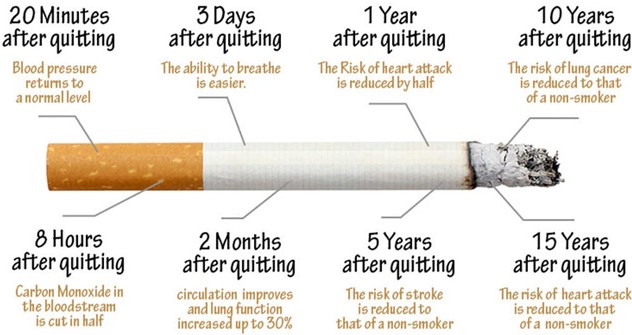
In 20 minutes: Your heart rate and blood pressure drop.
In 12 hours: The carbon monoxide level in your blood drops to normal.
In 2 to 12 weeks: Your circulation improves and your lung function increases.
When You Quit Smoking Just Don’t Let Down Your Guard

Quitting Smoking Happens One day One Hour, One Minute At A Time
It’s important to focus on each day. Quitting smoking is difficult, and your quit day was likely your greatest hurdle. Now you have to focus on never smoking again, not even one puff because that puff signals the brain that you may want to start again.
On each day that follows, review the strategies you planned when you were preparing to quit and use them in whatever combination works. Keep in mind that your plan can evolve as needed to help you meet your goal.
Resources To Help You Quit Smoking
Telephone, App And Text Messaging For More Good Support
Call 1-800-QUIT-NOW for free information to stop smoking or quit other forms of tobacco use. Counselors offer personalized advice and support while you’re prepping to quit, as well as while you’re quitting. Calling this toll-free number will connect you directly to trained coaches at your state’s quit line and to cessation services and other resources offered in your area. Help is available in English or Spanish, Monday through Friday, 8 am to 8 pm, Eastern Time at 1-877-44U-QUIT (1-877-448-7848).
App
Offer tips and tricks that can help you any time you need a boost. Here is one to download and test out before your quit day:
QuitSTART was created by Smokefree Teen, part of the Tobacco Control Research Branch at the National Cancer Institute in collaboration with tobacco control professionals and smoking cessation experts and with input from ex-smokers. It was developed with teens in mind, but anyone can use it. Track cravings and moods, monitor your progress in reaching milestones, identify triggers and upload personalized “pick me ups” and reminders to use when cravings strike. For more, go to teen.smokefree.gov, @SmokefreeTeen and Smokefree Teen Facebook or http://smokefree.gov/apps-quitstart.
Text
SmokefreeTXT is a mobile text messaging service that provides 24/7 encouragement, advice and tips to help you permanently quit smoking. To sign up, complete a simple form and click “Subscribe” at http://smokefree.gov/smokefreetxt.
Using E-cigarettes Is Substituting
One Bad Habit For Another

According to the National Institute on Drug Abuse, e-cigarettes (a cigarette-shaped device containing a nicotine-based liquid that is vaporized and inhaled, used to simulate the experience of smoking tobacco) are not a safe substitute for smoking a conventional cigarette. Like cigarettes, they also contain nicotine and other potentially harmful chemicals.
Scientists already know of some troubling chemicals in the products. One is formaldehyde, a known carcinogen. Another possible culprit is diacetyl, a flavoring agent that has been linked to lung disease. Read more and/or view this video on left for additional information (sorry about the ads):
Studies are still being done, but as long as you are getting nicotine, your health is under threat. Instead of helping someone stop smoking, e-cigarettes may merely prolong the time someone smokes.
Resource: Smokefree.gov, Helpguide, Quit.org.au and Quit Smoking Community.org
Frequently Asked Questions
Join the victors kicking the smoking habit. We’ve done it. We know how hard it is. Now it’s your turn. Click questions below for more answers.
10 tips to help you get through the stress. Read more
There are immediate responses. Stop smoking and you have instantaneous health benefits and your risk of getting certain chronic diseases is reduced. Read more
Willpower. Read more
It will help you get through the first 10 days, and also help change your life… Read more
Here are some really good suggestions… Read more
The effects continue for decades. Here’s a timeline… Read more
Your mind and your body will tell you. Read more
Telephone, Apps & Text Messaging For Support Read more
Are they safer than regular cigarettes? Read more
.png)