- info@selfchec.org
Powered by Google  Translate
TranslateEat Healthy

What To Do To Eat Healthier

According to the American Institute for Cancer Research, no single food or food component can by itself protect you against cancer and other chronic diseases, but there is strong evidence that a variety of plant foods—vegetables, fruits, whole grains and legumes like beans, peas and lentils—helps lower your risk for many cancers and other chronic diseases.
- Fruits and vegetables. These carbohydrates deliver well-known vitamins and minerals along with fiber, and they’re also rich in micronutrients that can help keep you healthy.
- Whole grains. Instead of white flour, white rice and regular pasta choose whole-wheat bread (not just “wheat” bread), whole-wheat pasta and brown rice. Other delicious offerings include bulgur, quinoa, barley, couscous and oatmeal.
Change Your Diet Now
Start With One, Stick To It For A Week Or Two, Then Add A Second, And So On
- Rein in calories. Many people are battling excess weight as well as (and possibly because of) eating the wrong foods. Calories eaten need to be balanced with calories burned from exercise, work and simply being alive.
- You might need to start by reducing your portion sizes (see below). Try cutting portions in half, but take twice as long to chew.
- Rebalance food choices. The USDA guidelines on how to fill your plate make for a good start. At each meal, fill half your plate with fruits and vegetables, one quarter with whole grains and the final quarter with lean protein. Make gradual cuts in fats—for instance, you might find it easier to go from whole milk to 2% to 1% to fat-free in stages. Reach for fruit, vegetables, or unsalted nuts when you want a snack, and replace at least one meat meal every week with a leaner protein source.

The Best Dietary Guidelines
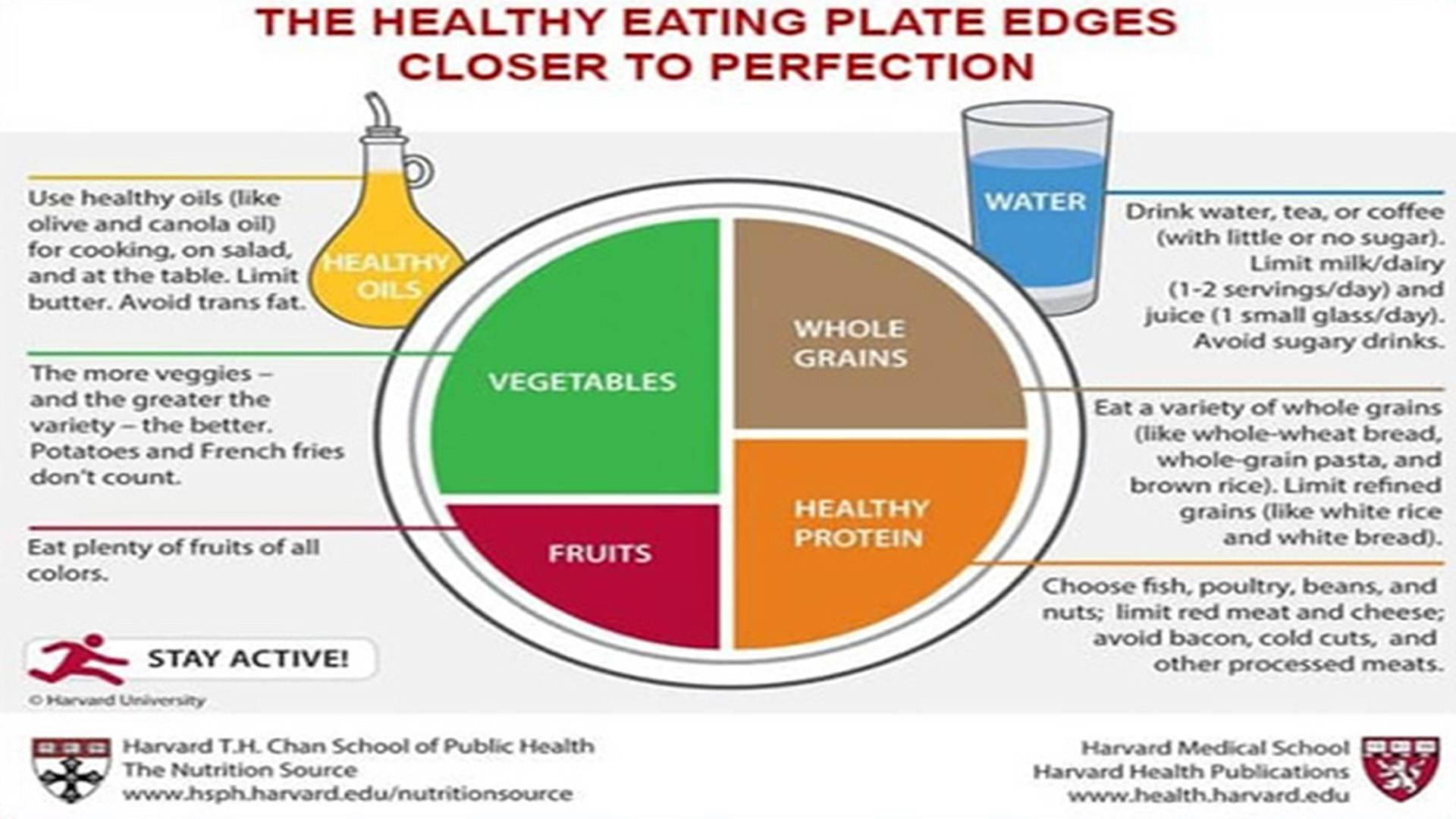
The Harvard School of Public Health has recently expanded the recommendations from the USDA (US Dept. of Agriculture) about eating healthy. On your left is an image of what their “Healthy Eating Plate” looks like.
The Harvard plan builds on the positives from the USDA, such as eating more foods from plants and eating more seafood in place of red meat or poultry to reduce saturated fat. Then it takes other recommendations farther:
- Eat more whole grains than the minimum of 50 percent recommended by the government.
- Limit red meat and processed meats, such as bacon, deli/luncheon meats and hot dogs, which are strongly linked to heart disease and diabetes.
- Limit dairy products, while calcium and dairy can lower the risk of osteoporosis and colon cancer, high intake can increase the risk of prostate cancer and possibly ovarian cancer.
Why The Mediterranean Style Diet
May Be The Best For You
The Mediterranean Diet seems to help guard against obesity (a risk factor for many health conditions) and diseases associated with chronic inflammation—diabetes, heart disease including plaque buildup in the arteries, lung cancer and other lung diseases, cancer and cognitive disorders like Alzheimer’s.
Rather than focusing on individual nutrients—like just eating more citrus for its vitamin C, for example—the Mediterranean Diet takes a holistic approach. It’s thought that the sum of all its parts (or foods) equals the healthiest food intake you can choose.
- Eat primarily plant-based foods, such as fruits and vegetables—six or more servings each day, plus whole grains, legumes and nuts. As healthy as they are, nuts are very high in calories—have just a handful, about 1 1/2 ounces in total, per day; almonds, cashews, pistachios and walnuts are great choices.

Resource: U.S. Department of Agriculture, Harvard Edu, American Heart Association, , Scientific American, Mayo Clinic Staff and PubMed.gov
Frequently Asked Questions

Eating healthy helps you avoid chronic conditions like high blood pressure, high cholesterol, diabetes, heart disease, stroke, and even the cognitive losses that can plague later life. Click questions below for more answers.
Much research has been done on nutrition. If you don’t know the best foods to eat, find out here.. Read more
Not easy! Read about the 5 things others have done to achieve a healthier diet. Read more
Harvard and the USDA have come together with a plan you can swallow. Read more
People in the Mediterranean have longer lifespans. Find out why. Read more
.png)