- info@selfchec.org
Powered by Google  Translate
TranslateLess Stress

Learn What The 3 Kinds Of Stress Are

Acute Stress
The Most Common Kind
It comes from those little bumps in the road of daily life. Emotionally, you’re likely to react by being irritable, anxious or angry.
You might develop physical symptoms like tension headaches or back or jaw pain. You could feel like your stomach is tied up in knots and lose your appetite, or get indigestion if you eat.
Frequent Acute Stress
The kind that comes in a predictable pattern. You might feel it if you’re a warrior, the type of person who burns the candle on both ends, lives life in a frenzy and feels like you can’t get a good grip on the demands you face, making you angry and short-tempered.
Find Out If You’re Stressed
Every Human Being
Suffers From Stress In Their Lifetime
Some of us have the inner mechanisms to help us get through difficult situations more successfully (for us) than others. While others get sick.
Please take this stress test from Berkeley University to find out where you fall in the stress continuum. Then read the rest of this section on stress to help you learn more about how to deal with it so it doesn’t make you sick.

Why All Stress Isn’t Bad For You

Few People Can Say That They Live Stress-free
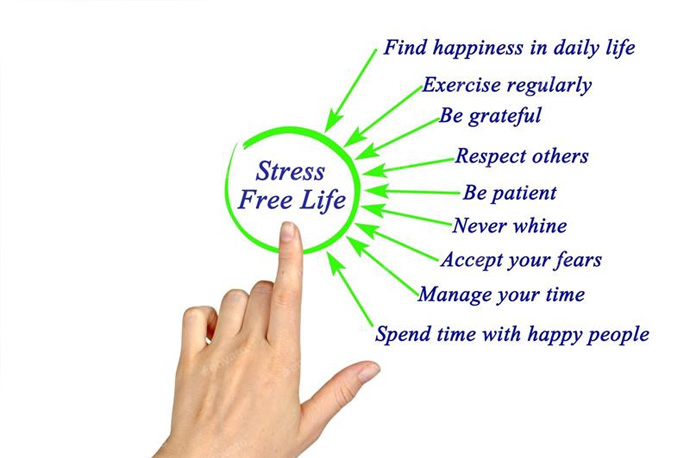
Luckily, not all stress is bad. Some stress can prompt actions or solutions to problems. But long-term, stress that never has an outlet and builds up nonstop can lead to both emotional and physical problems as well as worsen any health issues you already have.
Stress can be a particularly difficult problem when it’s relentless and you face it from all sides, at work and at home.
The Best Relaxation Techniques To Choose From
Here Is A Detailed Look At Three Approaches That Work To Ease Stress
Meditation
There are different approaches with most stemming from ancient traditions. They include transcendental meditation (TM), a specific form of mantra meditation developed by Maharishi Mahesh Yogi, mindfulness meditation and Zen Buddhist meditation. Zen is attempting to understand the meaning of life directly, without being misled by logical thought or language.
In its simplest form, meditation involves focusing your attention often on a word or sound that you repeat to rechannel your thoughts, feelings and sensations. Observing them in a nonjudgmental way can help you achieve a state of enhanced calmness and balance.
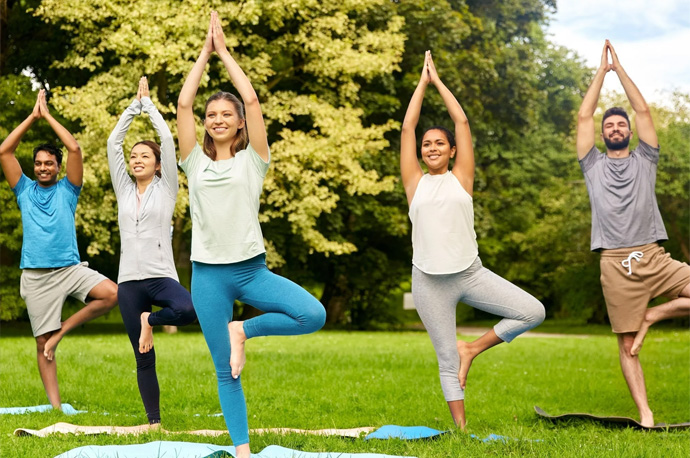
How Relaxation Techniques Impact Your Health
In contrast to the body’s stress response, the relaxation response slows your heart rate, lowers blood pressure and decreases oxygen consumption and levels of stress hormones.
Because relaxation is the opposite of stress, you may be able to create a relaxation response through relaxation techniques and counteract the negative effects of stress, both emotional and physical.
The goal of every technique is to consciously produce the body’s natural relaxation response—slower breathing, lower blood pressure and a feeling of calm and well-being.
Relaxation techniques have been studied for their ability to ease many health conditions, but often these studies have been small and at times results are conflicting. Still, relaxing might fit into an overall management plan for heart disease and stopping smoking, two of the challenges we’ve talked about on the site.
According to the Helpguide.org, most relaxation techniques can be self-taught and practiced, often with a book or DVD.
What To Do Before Starting A Relaxation Program
Relaxation Techniques Are Generally Considered Safe For Healthy People
According to National Center for Complementary and Integrative Health NCCAM, if you have a medical condition, talk to your health professional before starting a technique that involves more than deep breathing.
If you have heart disease, epilepsy, a psychiatric condition or a history of abuse or trauma, talk to your health professional before starting any approach.
Relaxation techniques are often used as part of a treatment plan and not as the only approach for potentially serious health conditions. Never use a relaxation technique to replace conventional medical care or to postpone seeing your healthcare professional about pain or any other medical condition.

Choose The Best Health Professionals
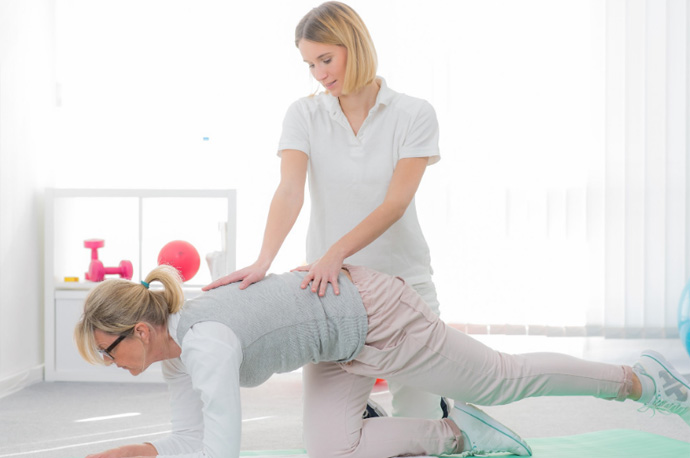
Ask About The Training Of The Practitioner Or Instructor You Are Considering
There is no formal credential or license required for practicing or teaching a relaxation technique; the techniques may be used or taught by licensed professionals, including physicians, recreational therapists and psychologists.
- If you need names of practitioners in your area, first ask your health professional.
- Find out as much as you can about any potential practitioner, including his/her education, training, licensing and certifications, credentials that vary tremendously from state to state and from discipline to discipline.
- Find out whether he/she is willing to work together with your conventional health professionals for safe, coordinated care.
Resources: American Psychological Association, Stanford, National Center for Complementary and Integrative Health (NCCAM)
Frequently Asked Questions
Are you a “warrior” or a “worrier”? Read more
Take this test and find out. Read more
You’ll be surprised to learn the answer. Read more
Learning the relaxation basics can help you to practice on your own schedule. Read more
Read why so many people are using relaxation techniques to help keep stress levels at bay. Read more
See what The National Center for Complementary and Integrative Health suggests. Read more
Just check out the resources on this page… Read more
.png)